
If you own a rental in one of the towns around London — Strathroy, Mount Brydges, Komoka, Ilderton, Lucan — you already know it’s a different world than renting in the city. The tenant pool is smaller, the pace is different, and most of the advice written for big-city landlords doesn’t quite fit. This is a guide to renting out a property in Strathroy and the surrounding area: what’s actually different here, and how to do it well.
The towns we’re talking about
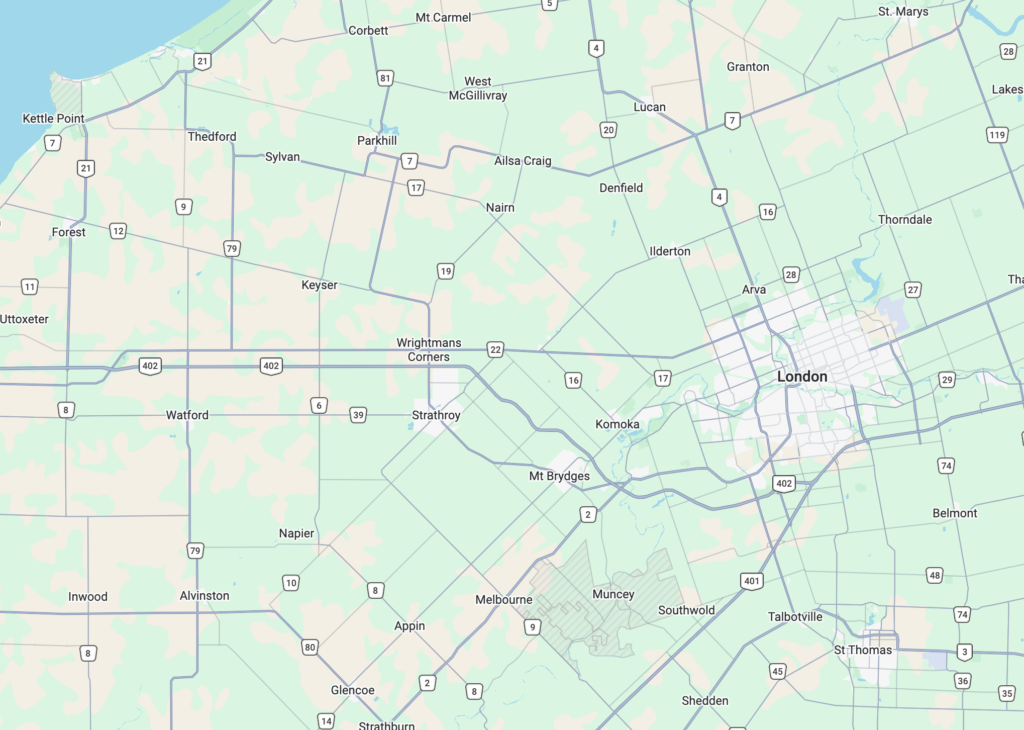
When we say “the area,” we mean the ring of communities within about 40 km of Strathroy, mostly within Middlesex County: Strathroy, Mount Brydges, Komoka, Kilworth, Delaware, Ilderton, Lucan, Parkhill, Glencoe, Newbury, Thorndale, Arva, and Watford. Each has its own character — Komoka and Kilworth are fast-growing bedroom communities just west of London, Ilderton and Lucan pull families to the north, and Strathroy is the largest hub with its own downtown and amenities — but they share a rental dynamic that’s genuinely distinct from London itself.
What’s different about renting in the towns
The pool is smaller, but steadier. Fewer renters are looking at any given moment than in the city. The flip side is that the tenants you do land tend to stay longer — families, local workers, and commuters who chose the town on purpose and aren’t looking to bounce after a year. Lower churn and longer tenancies are the reward, if you keep them happy.
A lot of your demand comes from London. Affordability and space push London renters outward, and hybrid work made a 20-minute drive worth it for a backyard and an extra bedroom. So your renter pool isn’t only the town’s inhabitants, it’s also London renters who’d happily look just outside the city for more house at a better price. That changes how you should market (more on that below).
Price to the town, not to London. Rents in the area often run a little below comparable London units, but you’re trading a slightly lower number for stronger demand and lower turnover on the right home. The mistake to avoid is pricing to London’s figures. In a thinner market, an overpriced unit sits longer, and out here “longer” really means longer.
The marketing catch (and how to beat it)
Here’s the trap the towns create: because fewer people are browsing at any moment, “post it once and wait” fails far more often than it does in the city. To fill a rental out in the county quickly, you need three things working together: quality photos and a short video tour, wide distribution across every channel renters actually use, and deliberate reach into London’s renter pool.
That last point is the one most owners miss. A meaningful share of your best applicants are people searching for a place in London who would gladly drive 20 minutes for a bigger yard and a lower rent. A listing that targets only the town the property is in leaves half your demand on the table. Cast the net wider than your postal code.
Finding and keeping good local tenants
Screening is the same everywhere; credit, income, employment, references, and prior-tenancy history, applied consistently and by the book. What changes in a small market is how much retention matters. In a thin pool a vacancy can linger, and turnover is the single most expensive thing that happens to a small-town rental. Keeping a good tenant — responsive repairs, fair renewals, simply treating them well — is almost always worth more than squeezing the last dollar out of the rent.
Why “local” actually matters out here
This is where town rentals reward a very specific kind of manager. The bigger London and city-based firms tend to treat the towns as an afterthought. They’re slow to drive out for a showing, slow to send a tradesperson 25 minutes down the road, and they couldn’t tell you the difference between Komoka and Kilworth. A vacant unit in Mount Brydges simply isn’t a priority when the rest of their portfolio is downtown.
For a town rental, the things that genuinely move the needle — showing it quickly, having a local trades network that will actually show up, and knowing what the area realistically rents for — all favour a manager who is local and responsive by default. And in today’s softer market, where London’s vacancy rate has eased to around 3.2% and renters have more choice than they did two years ago, that speed and local reach matter more than ever. An empty unit out here can sit, and every week it sits is rent you’ll never get back.
One thing that isn’t different: the rules
The Residential Tenancies Act, the mandatory Ontario standard lease, and the 2026 rent-increase guideline of 2.1% apply in Strathroy and every surrounding town exactly as they do in London. A small-town tenancy is still a fully regulated tenancy — the notices, the lease, and the paperwork all have to be right, wherever the property sits.
Renting in the area? That’s exactly what we’re built for
If you own a rental in Strathroy, Mt. Brydges, Komoka, Kilworth, Delaware, Ilderton, Lucan, or anywhere in the area, the local advantage is the whole point of how we work — a responsive local team that knows these towns, markets your unit to the right people (including London), and treats your property like it matters, because to us it does.
Get a free proposal and we’ll show you exactly what we’d do with yours.
This article is general information for Ontario landlords and isn’t legal advice. Market figures are current as of 2026 and can change — confirm specifics before acting.